 Bond Screener

Mongolia Bonos soberanos
Nombre del país
Mongolia
Calificaciones
en moneda extranjera
Deuda pública
3.401 mln USD
7,39 USD Billion
30/09/2026

¿Es nuevo en Cbonds? · Realice un recorrido de 90 segundos por la plataforma.
Descubra todo lo que puede hacer con Cbonds
Todo lo que necesita para el análisis y el seguimiento de renta fija.
- 00:28 Cobertura
- 00:40 Buscador de bonos
- 00:51 Parámetros
- 00:58 Watchlist, App móvil
- 01:07 Excel Add-in
Horario de negociación Mapa del emisor
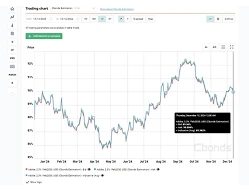
Cotizaciones
/
/
/
un.
un.
un.
- «
- 1
- ...
- {{ quotes.page - 2 }}
- {{ quotes.page - 1 }}
- {{ quotes.page }}
- {{ quotes.page + 1 }}
- {{ quotes.page + 2 }}
- ...
- {{ quotesLastPage }}
- »
Cotizaciones facilitadas por los proveedores de la información son indicativas
Perfil
|
Mongolia operated as a Soviet-style centrally planned economy until the establishment of a new coalition government in 1990. Since 1990, Mongolia has transitioned into a market-oriented economy, with the private sector constituting 75.2% of the nation’s GDP in 2011, according to the National Statistical Office of Mongolia. Today, Mongolia is one of the world’s fastest growing economies, with a real growth rate of 17.5% in 2011. Recent growth has been primarily driven by expanding coal and copper production, ongoing development of new large mining projects, growth in the agriculture sector due to the sector’s recovery from the effects of the severe winter conditions in late 2009 and 2010 and a highly expansionary fiscal policy. Mongolia, however, faces certain challenges, including high rates of inflation, a growing dependence on the production and export of commodities, trade dependence on China and Russia, a growing need for foreign direct investment (“FDI”) to develop infrastructure projects, and fuel and energy requirements.
Public sector debt has risen steadily in recent years and, as at June 30, 2012, amounted to U.S.$3.5 billion. According to the National Statistical Office of Mongolia, Mongolia has a relatively prudent government debt management system among its Asian peers, with its total government debt to GDP ratio at 38.3% as at June 30, 2012. Public sector domestic debt is comprised of borrowings by the Government. The Bank of Mongolia is a major lender to the Government, holding approximately 33% of the total outstanding public sector bonds as at December 31, 2011. Other major lenders include domestic commercial banks. |
Información general
-
Nombre de la empresaMongolia
-
Estatus de organizaciónOperating organization
-
DirecciónGovernment House - 4, Ulaanbatar - 11, Mongolia
-
Página web
Noticias
-
Nueva emisión: Mongolia emitió bonos internacionales (USY2056PAJ58) con un cupón de 7.2% por USD 500 millones con vencimiento en 2031.26/06/2026
-
Nueva emisión: Mongolia emitió bonos internacionales (USY6142NAL20) con un cupón de 5.95% por USD 500 millones con vencimiento en 2032.03/03/2026
-
Nuevo número: Emisor Mongolia emitió bonos internacionales (USY6142NAH18) con un cupón de 7.875% por USD 350 millones con vencimiento en 2029.30/11/2023
-
Nuevo número: Emisor Mongolia emitió bonos internacionales (USY6142NAG35) con un cupón de 8.65% por USD 450 millones con vencimiento en 2028.17/01/2023
Acciones
Información general
-
Nombre de la empresaMongolia
-
Estatus de organizaciónOperating organization
-
DirecciónGovernment House - 4, Ulaanbatar - 11, Mongolia
-
Página web
Participación en las organizaciones internacionales
Deuda en bonos según divisa
Códigos
-
SIC9199 General government
-
NACE*** ***
-
NAICS*** ***
Macroeconomía
MSE TOP 20
Mongolian S.E. Market Cap Index, mln.USD
Capitalization leaders
Búsqueda de acciones| Nombre de la acción | ISIN | Capitalización, mln USD |
|---|---|---|
| Mongolian Mining Corporation, ord. | KYG6264V1361 | 1.001,75 |
| Khan Bank, ord. | MN0KHAN05637 | 892,95 |
| Tavan Tolgoi Incorporate, ord. | MN00TTL04580 | 830,52 |
| XacBank, ord. | MN00XAC05687 | 398,28 |
| APU, ord. | MN00APU00900 | 308,71 |
| Golomt Bank, ord. | MN0GLMT05621 | 283,16 |
| Invescore NBFI, ord. | MN00INV05533 | 167,9 |
| TDB Mongolia, ord. | MN00TDB05673 | 166,63 |
| State Bank Mongolia, ord. | MN00SBM05643 | 105,6 |
| Mongolian Mortgage Corporation, ord. | MN00MIK05421 | 90,34 |