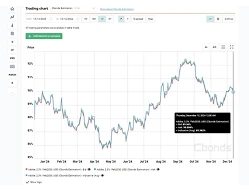



Latvia, 3.5% 10jun2033, EUR (FIGI RegS BBG022R91X73, XS3395907705)
Eurobonos, Bonos sostenibles, Senior Unsecured

Explore bonos aplicando más de 50 filtros avanzados (calificación, rentabilidad, precio y más)
Solicite su accesoEurobonos, Bonos sostenibles, Senior Unsecured
Cbonds reúne en una sola plataforma datos globales de bonos, acciones, ETFs e índices, para que pueda analizar más rápido, tomar decisiones informadas y adelantarse al mercado.
Solicite su accesoIncluye parámetros,
detallados, prospectos y documentación clave
Analice y trabaje con la información de forma eficiente
Acceda a cotizaciones actuales e históricas de más de 400 bolsas y mercados OTC
Visualice calificaciones crediticias y estados financieros actualizados
Explore la más completa base de datos
1 000 000
bonos
80 234
acciones
167 970
ETF & Funds
80 000
índices
Siga su portfolio de la manera más eficiente
Explore bonos aplicando más de 50 filtros avanzados (calificación, rentabilidad, precio y más)
Solicite su acceso|
In Latvia the fixed income market is small by international standards, yet it has developed a versatile legislative framework and adequate institutions. The Latvian fixed income market is formed by the governmental bonds, mortgage bonds, and ...
In Latvia the fixed income market is small by international standards, yet it has developed a versatile legislative framework and adequate institutions. The Latvian fixed income market is formed by the governmental bonds, mortgage bonds, and corporate bonds. In 2008 these segments took s 73 %, 16 %, and 11 %, respectively. Government bonds strongly dominate the Latvian capital market in the aspect of both amount and liquidity.
Development of Latvia's government bond market started in December 1993. Since 1999, government bonds have been actively traded at the Riga Stock Exchange. The attractiveness of Latvian government bonds is determined by the good country rating and the fact that the volume of the non-government bonds is not large. One of the basic features of Latvia's capital market is the preference that non-financial enterprises have for banks' credit over the issuance of bonds. Bond yields are usually higher than credit interest rates, therefore issue of bonds is not attractive to companies. Banks are the most active issuers in the corporate bond segment. |
|
|
|
|
|
|
|
|
Explore la más completa base de datos
1 000 000
bonos
80 234
acciones
167 970
ETF & Funds
80 000
índices
Siga su portfolio de la manera más eficiente
Explore bonos aplicando más de 50 filtros avanzados (calificación, rentabilidad, precio y más)
Solicite su acceso